

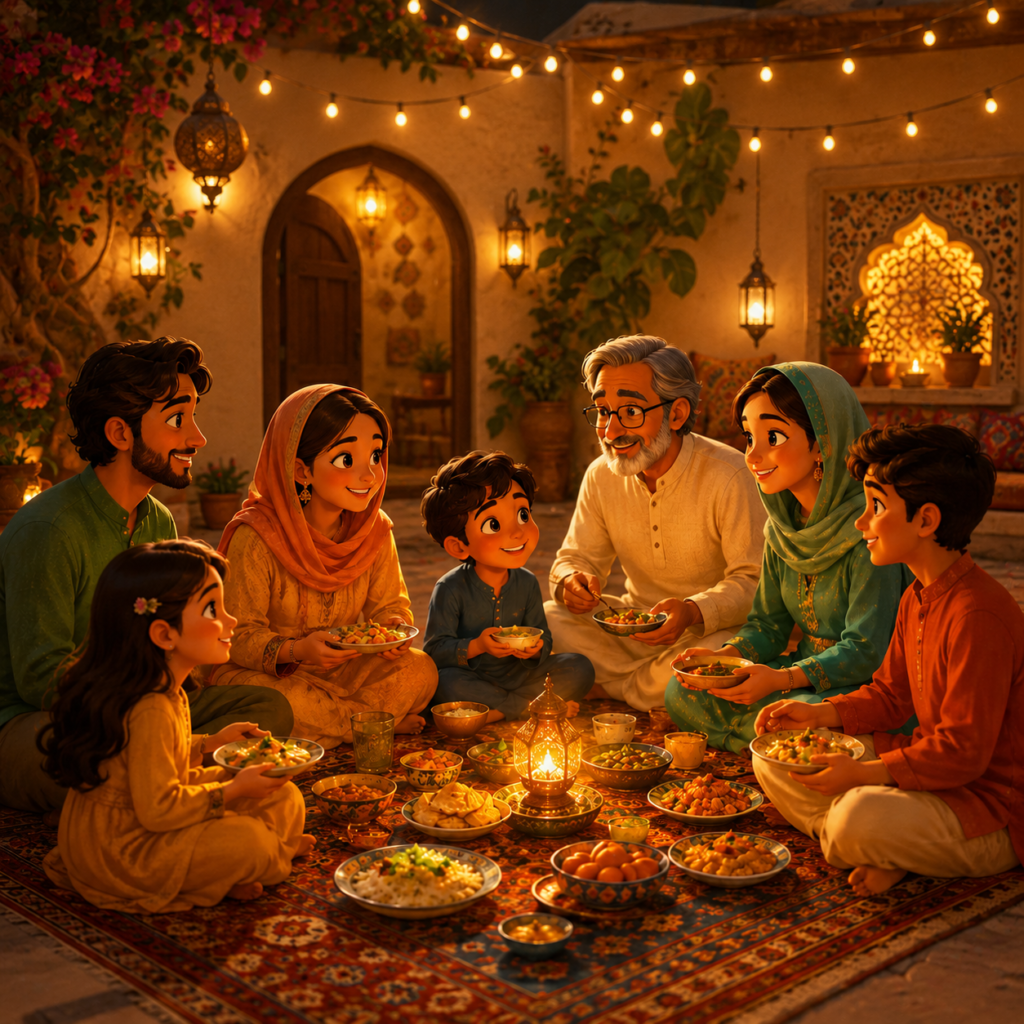
For many of us, Eid Al Adha means the smell of food being prepared since dawn, the sound of family filling rooms that have been quiet for months, and group chats buzzing with “Eid Mubarak.” It brings that particular mix of warmth and complexity that only family gatherings can introduce.
Because let’s be honest—family time during the holidays is not always the picture-perfect moment we hope for.
Some of us are gathering with people we love deeply but find genuinely difficult to be around. Others are sitting at tables where there are empty seats—remembering people we’ve lost, relationships that have drifted, or circumstances that have changed. Many are navigating deep family dynamics that have never quite healed, or showing up to traditions that don’t fully see who we’ve become.
And we do it anyway. We dress up, we show up, and we try.
That is not small. That is, in its own quiet way, an act of profound love.
What Eid Al Adha Teaches Us About Sacrifice
The spirit of this day is deeply rooted in sacrifice—in Prophet Ibrahim’s willingness to surrender what was most precious to him out of faith and devotion. There is something incredibly moving about that story, not just as a religious narrative, but as a universal human experience.
In our everyday lives, sacrifice rarely looks dramatic. Instead, it looks like:
- Choosing patience when you desperately want to react.
- Softening your tone with a parent who doesn’t fully understand you.
- Staying present at the dinner table even when part of you wants to leave.
- Releasing the expectation that this holiday will finally be the one where everything feels perfect.
Sometimes, the greatest sacrifice is letting go of the version of family you wished you had, so you can be genuinely present with the family you actually have.
Why Showing Up for Holiday Traditions Still Matters
Even when it feels difficult, there is real psychological value in gathering. Research and therapists alike remind us that holiday traditions—the rituals of coming together, sharing a meal, and observing something bigger than ourselves—have a measurable impact on our emotional well-being.
According to therapist Trisha Jarnagin, these shared rituals trigger our bodies to release oxytocin and dopamine. These are the very hormones connected to feelings of belonging, connection, and happiness. They strengthen our ability to cope with adversity and give us a sense of continuity, even when life feels uncertain.
Deepen Your Reading: You can explore more about how these dynamics impact mental health in the full article,The Value of Family Traditions During the Holidays: A Therapist’s Perspective.
This doesn’t mean we pretend the hard parts don’t exist. It means we hold both truths at once: that this can be complicated, and that showing up still counts for something.
Caring for Yourself in the Middle of It All
Here is what you need to remember today, and in the days ahead as celebrations continue: your self-care does not stop just because it is a holiday. In fact, this is exactly when it matters most.
As you navigate your Eid Al Adha family gatherings, remember what you are allowed to do:
- Take a breath: Give yourself a moment of grounding before you walk through the front door.
- Step outside: Step away for a moment of quiet when the noise and energy become too much.
- Set gentle limits: Leave at a time that honors your peace, redirect a conversation that is pulling you somewhere painful, and hold your own feelings with tenderness.
Caring for yourself within family time is not selfish. It is how you stay present. It is how you give your best self to the people you love, instead of a version of you that is running on empty and counting down the hours.
A Reflection for Today
As you move through this Eid, carry this one simple question with you:
What would it look like to show up today with both an open heart and a protected one?
Not closed off. Not performing. Not bracing for impact. But genuinely present—and simultaneously gentle with yourself about whatever emotions this day stirs up for you.
That is the work. Not just on Eid, but in every relationship, every season, and every version of family we find ourselves in.
Eid Mubarak to you and yours. May this day hold more ease than difficulty, more connection than distance, and may you end it knowing you took excellent care of yourself along the way.